Few food items in India create the kind of emotional connection that biryani does. From late-night cravings and family celebrations to office lunches and food-delivery orders, biryani has become one of the country’s most loved and consistently consumed dishes.
A few decades ago, biryani businesses were mostly limited to traditional restaurants and local eateries known within their cities. Today, the situation has changed completely.
Food-delivery apps, cloud kitchens, YouTube food culture, Instagram food pages, and rising urban eating habits have transformed biryani into one of India’s biggest food-business categories. Whether it is Hyderabadi biryani, Kolkata biryani, Lucknowi biryani, or regional fusion styles, demand exists almost everywhere.
At the same time, biryani works across multiple business models — dine-in restaurants, takeaways, cloud kitchens, catering, franchises, and delivery-focused operations.
This has transformed the biryani business into one of India’s strongest and most scalable food ventures.
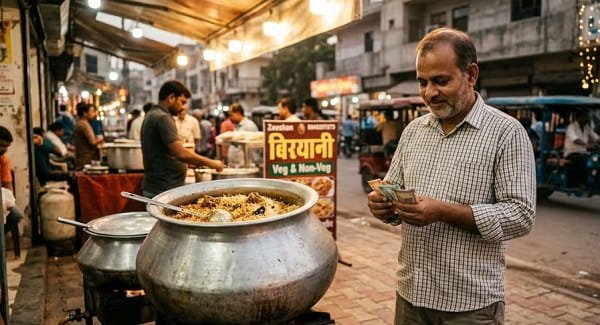
A Business Connected to India’s Massive Food Market
India’s food-service industry continues expanding rapidly.
Several factors continue driving biryani demand:
- Growth of food-delivery apps
- Increasing urban eating culture
- Rising youth population
- Expansion of cloud kitchens
- Late-night food demand
- Strong regional food preferences
Unlike trend-based food items that disappear quickly, biryani has deep cultural popularity across generations.
Types of Biryani Businesses
1. Small Takeaway Biryani Shop
Low-investment local takeaway model.
2. Cloud Kitchen Biryani Business
Delivery-focused kitchen without dine-in space.
3. Full-Service Biryani Restaurant
Dining experience with larger menu offerings.
4. Franchise Biryani Outlet
Operating under an established food brand.
5. Premium Regional Biryani Brand
Specialized authentic recipes and regional flavors.
6. Catering and Bulk Biryani Service
Events, weddings, parties, and corporate orders.
Investment Required: Low to High
Biryani businesses are flexible depending on scale.
A small takeaway or cloud kitchen setup may require ₹2–10 lakh including:
- Kitchen equipment
- Raw materials
- Rent and licenses
- Packaging
- Delivery setup
- Staff salaries
A large restaurant or franchise operation may require ₹20 lakh–₹5 crore or more depending on location and brand positioning.
Food quality and consistency matter more than expensive interiors in many cases.
Revenue and Profit Potential
Biryani businesses can become highly profitable because food demand remains constant and repeat-customer potential is strong.
Revenue sources may include:
- Dine-in sales
- Food-delivery app orders
- Bulk catering
- Combo meals and beverages
- Franchise expansion
- Festival and party orders
For example:
- Cloud kitchens often reduce rent costs significantly.
- Family-pack and party orders improve billing size.
- Strong local reputation creates repeat customer flow.
A successful biryani business can generate substantial daily cash flow. Net profit margins generally range between 15–35% depending on food costs, location, and operational efficiency.
Delivery-focused brands with strong online ratings often scale especially fast.
What Makes This Business Successful
1. Taste Consistency
Customers expect the same flavor every time.
2. Rice and Ingredient Quality
Biryani quality depends heavily on ingredients.
3. Strong Local Branding
Food businesses grow strongly through reputation and word-of-mouth.
4. Fast Delivery and Packaging
Delivery quality directly affects customer satisfaction.
5. Hygiene and Kitchen Management
Cleanliness matters enormously in food businesses today.
Challenges to Prepare For
1. Heavy Competition
Almost every city has multiple biryani brands already.
2. Food-Cost Fluctuation
Chicken, mutton, rice, and spices can fluctuate heavily in price.
3. Delivery-App Commission Pressure
Food-delivery platforms often take large commissions.
4. Maintaining Taste Consistency
Scaling recipes across multiple staff members can become difficult.
5. Staff and Kitchen Management
Food businesses require daily operational supervision.
Biryani businesses that maintain consistent taste and customer experience usually survive competition much better than those competing only on low prices.
How to Increase Profitability
1. Focus on Signature Taste
Unique flavor identity builds loyal customer base.
2. Use Cloud Kitchen Model Initially
Lower investment reduces financial risk.
3. Add Family Meals and Combo Offers
Larger order values improve profitability.
4. Build Strong Instagram and Food-Marketing Presence
Food visuals attract customers extremely effectively.
5. Expand Into Catering and Events
Bulk orders significantly improve revenue opportunities.
Biryani Business vs General Restaurant Business
General restaurants require larger menus, broader inventory, and more operational complexity. Biryani-focused businesses specialize deeply in one high-demand category.
This creates stronger brand identity and easier kitchen management.
However, maintaining flavor uniqueness becomes extremely important because competition is intense.
The Future of Biryani Business in India
The future remains extremely strong. India’s food-delivery culture, urban lifestyle changes, and online ordering habits continue expanding rapidly.
Regional biryani styles, premium packaging, fusion variations, and late-night delivery models are also creating fresh opportunities in the market.
At the same time, younger consumers increasingly explore food brands through social media and delivery apps, helping strong brands scale faster than before.
The Verdict: A Strong Food Business With Massive Mass-Market Demand
Biryani is no longer just a traditional dish served during special occasions. It has evolved into one of India’s biggest everyday food categories connected closely to delivery culture, urban eating habits, and regional food identity.
Entrepreneurs who maintain strong taste consistency, quality ingredients, fast service, and effective branding often build highly profitable food businesses with strong repeat-customer demand.
In a country where food culture remains deeply emotional while online food ordering continues growing rapidly every year, the biryani business is likely to remain one of India’s strongest long-term food-business opportunities.
Frequently Asked Questions (FAQs)
Q1. Which biryani business model is usually most profitable?
A: Cloud kitchens and delivery-focused models often provide strong margins because they reduce dine-in infrastructure costs.
Q2. Why is biryani demand so strong in India?
A: Because it combines taste, affordability, filling quantity, and cultural popularity across multiple regions.
Q3. Is location very important for biryani business?
A: Yes. Areas with students, offices, families, and delivery demand usually perform much better.
Q4. What is the biggest challenge in biryani business?
A: Maintaining consistent taste and managing operational quality daily are major challenges.
Q5. Can small local biryani brands compete against large chains?
A: Absolutely. Many local brands succeed because customers strongly value authentic taste and regional flavor quality.
Q6. Is delivery more important than dine-in today?
A: In many urban markets yes. Food-delivery platforms and cloud kitchens now drive a major portion of biryani sales.