Milk has always been a part of daily life in India. From tea, curd, butter, and paneer to sweets, ghee, flavored milk, and protein products, dairy consumption is deeply connected to Indian food culture.
A few decades ago, most milk distribution happened through local dairies and unorganized vendors. But rising urbanisation, packaged-food demand, refrigeration infrastructure, and health awareness have changed the industry completely.
Today, consumers increasingly prefer hygienic packaged dairy products with better shelf life, quality control, and branded trust. At the same time, India remains one of the world’s largest milk-producing countries, creating massive opportunities for dairy processing businesses.
This has transformed dairy processing plants into one of India’s strongest food-manufacturing industries.
Unlike small dairy farming businesses focused mainly on raw milk production, dairy-processing plants create value-added products with higher margins and larger scalability.
A Business Connected to Daily Consumption and Food Industry Growth
India’s dairy market continues expanding rapidly every year.
Several factors continue driving dairy demand:
- Growing urban population
- Rising packaged-food consumption
- Expansion of supermarkets and cold chains
- Increasing health and protein awareness
- Growth of restaurants and sweet industries
- Demand for hygienic branded dairy products
Milk and dairy products remain essential household items across most Indian families.
Types of Dairy Processing Plant Businesses
1. Milk Processing Plant
Pasteurized and packaged milk production.
2. Paneer and Cheese Manufacturing
High-demand protein and food-service dairy products.
3. Ghee and Butter Production
Traditional dairy products with strong Indian demand.
4. Flavored Milk and Beverage Plant
Ready-to-drink dairy beverages and shakes.
5. Ice Cream and Frozen Dairy Products
Desserts and frozen-food dairy business.
6. Multi-Product Dairy Processing Unit
Plants producing multiple dairy products together.
Investment Required: High
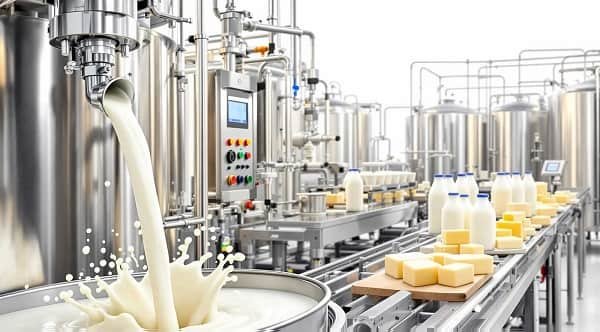
Dairy processing plants require machinery, cold storage, hygiene systems, and regulatory approvals.
A small processing unit may require ₹25 lakh–₹2 crore including:
- Milk chilling and storage systems
- Pasteurization machinery
- Packaging equipment
- Refrigeration infrastructure
- Quality-testing systems
- Licenses and food-safety approvals
A large automated dairy-processing plant may require ₹5 crore–₹100 crore or more depending on scale and product range.
Cold-chain management and product quality are extremely important in this industry.
Revenue and Profit Potential
Dairy processing can become highly profitable because dairy products have strong daily-consumption demand and recurring sales.
Revenue sources may include:
- Packaged milk sales
- Paneer, cheese, and butter production
- Ghee and traditional dairy products
- Ice cream and desserts
- Bulk supply to hotels and restaurants
- Retail and supermarket distribution
For example:
- Value-added dairy products often generate stronger margins than raw milk alone.
- Paneer and cheese demand continues growing rapidly.
- Branded dairy products improve pricing power significantly.
A well-managed dairy-processing business can generate substantial daily revenue. Net profit margins generally range between 10–25% depending on product category, milk procurement costs, and operational efficiency.
Value-added product businesses often perform especially well.
What Makes This Business Successful
1. Consistent Product Quality
Taste and hygiene directly affect customer trust.
2. Strong Milk Procurement Network
Reliable raw-milk supply is extremely important.
3. Cold Storage and Logistics Management
Dairy products require careful temperature control.
4. Food Safety Compliance
Quality standards and testing are critical.
5. Distribution Strength
Retail availability strongly affects sales volume.
Challenges to Prepare For
1. High Initial Investment
Machinery and refrigeration infrastructure are expensive.
2. Perishable Inventory Risk
Dairy products spoil quickly without proper management.
3. Milk Price Fluctuations
Raw-material costs can vary significantly.
4. Strict Hygiene Standards
Food safety violations can seriously damage reputation.
5. Cold-Chain Dependency
Transportation and storage failures affect product quality directly.
Dairy businesses that maintain strong hygiene systems and efficient distribution usually survive competition much better long term.
How to Increase Profitability
1. Focus on Value-Added Products
Paneer, cheese, ghee, and flavored milk often provide stronger margins.
2. Build Strong Local Milk Collection Network
Reliable sourcing improves long-term stability.
3. Create Regional Brand Identity
Local trust strongly influences dairy purchasing decisions.
4. Expand Into Institutional Supply
Hotels, sweet shops, and restaurants create bulk recurring demand.
5. Invest in Efficient Cold Chain Systems
Reducing spoilage improves profitability significantly.
Dairy Processing Plant vs Dairy Farming Business
Dairy farming focuses mainly on milk production from cattle. Dairy processing businesses create packaged and value-added products from raw milk.
Processing plants usually offer stronger scalability and branding opportunities.
However, operational complexity and infrastructure investment are also much higher.
The Future of Dairy Processing Business in India
The future remains extremely strong. India’s growing population, rising protein consumption, packaged-food culture, and organized retail expansion continue increasing dairy demand rapidly.
Health-focused dairy products, premium cheese, protein beverages, organic dairy, and ready-to-drink products are also likely to see major growth in coming years.
At the same time, consumers increasingly prefer trusted hygienic brands over loose unprocessed dairy products.
The Verdict: A Large-Scale Food Manufacturing Business With Strong Everyday Demand
Dairy processing is no longer limited to local milk packaging and traditional dairy shops. It has evolved into a major FMCG and food-manufacturing industry connected closely to nutrition, daily consumption, restaurants, supermarkets, and modern retail systems.
Entrepreneurs and companies that maintain strong quality standards, efficient cold-chain operations, reliable sourcing networks, and effective branding often build highly stable and scalable businesses with recurring demand.
In a country where dairy products remain deeply connected to everyday food habits while organized food consumption continues expanding rapidly, dairy processing is likely to remain one of India’s strongest long-term food-industry opportunities.
Frequently Asked Questions (FAQs)
Q1. Which dairy products are usually most profitable?
A: Paneer, cheese, ghee, flavored milk, and premium dairy products often provide stronger profit margins than regular milk.
Q2. Why is cold-chain management important in dairy processing?
A: Because dairy products spoil quickly without proper refrigeration and transportation systems.
Q3. Is milk procurement the biggest factor in this business?
A: Very important. Consistent raw-milk quality and supply directly affect production stability.
Q4. What is the biggest challenge in dairy-processing business?
A: Managing perishability, hygiene standards, and distribution efficiency are major challenges.
Q5. Can small regional dairy brands compete against large companies?
A: Absolutely. Many local dairy brands succeed through freshness, regional trust, and strong local distribution.
Q6. Is demand for packaged dairy products increasing in India?
A: Yes. Urban consumers increasingly prefer hygienic branded dairy products with reliable quality and convenience.