Yes, a tiffin service business is legal in India, provided the operator complies with applicable food-safety, registration, hygiene, taxation, packaging and local business requirements. A tiffin service can be operated from a commercial kitchen or, subject to applicable local rules, from a home kitchen. The business may supply meals to students, office workers, paying-guest accommodations, households and other customers.
The most important legal requirement is compliance with the Food Safety and Standards Authority of India (FSSAI). Under Section 31 of the Food Safety and Standards Act, 2006, every Food Business Operator (FBO) is required to obtain the appropriate FSSAI registration or licence. FSSAI’s current guidance states that petty food businesses with annual turnover up to ₹12 lakh can generally fall under the registration category, while businesses above that limit require a licence.
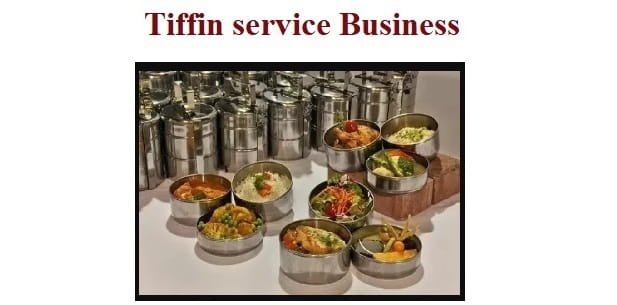
What Is a Tiffin Service Business?
A tiffin service prepares and supplies ready-to-eat meals to customers, usually on a daily, weekly or monthly subscription basis. Some operators prepare vegetarian meals, while others offer non-vegetarian food, regional cuisines or customized meal plans.
Unlike a traditional restaurant, a tiffin business may not have a dining area. However, it is still a food business because meals are being prepared and supplied commercially to consumers.
The absence of a dine-in facility does not exempt the operator from food-safety regulations.
Is FSSAI Registration Required?
Yes. A tiffin service is generally required to have the appropriate FSSAI registration or licence.
FSSAI identifies small and cottage-scale food businesses among those eligible for registration when their annual turnover is within the prescribed limit. Its eligibility material also covers food-service activities and food vendors.
For a small tiffin operator, basic FSSAI registration may therefore be sufficient if the business meets the applicable eligibility conditions. If the business grows beyond the registration threshold or falls into a category requiring a licence, the operator must obtain the appropriate licence.
Applications and compliance processes are handled through FSSAI’s FoSCoS system.
Can You Run a Tiffin Service From Home?
A person may be able to operate a small tiffin service from home, but FSSAI registration is not necessarily the only consideration.
The operator should also check whether the particular residential premises can legally be used for the proposed commercial activity under applicable municipal, local-authority, housing-society, lease and zoning rules.
For example, a small home kitchen preparing a limited number of meals for nearby customers may raise different issues from a large operation with several employees, commercial cooking equipment, substantial storage and frequent delivery vehicles.
Therefore, obtaining FSSAI registration should not automatically be treated as permission to use every residential property for commercial food production.
Hygiene Requirements for Tiffin Services
Food safety is one of the most important responsibilities of a tiffin operator.
FSSAI’s Schedule 4 establishes hygienic and sanitary requirements for food businesses. The framework includes separate requirements for petty food operators, manufacturing and processing businesses, and catering activities.
A tiffin operator should pay particular attention to:
- Clean cooking and preparation areas
- Personal hygiene of food handlers
- Safe drinking and cooking water
- Proper storage of ingredients
- Prevention of cross-contamination
- Clean utensils and equipment
- Appropriate cooking and holding temperatures
- Pest control
- Proper waste disposal
- Hygienic packaging
- Safe transportation and delivery
These measures are especially important because prepared food can deteriorate or become contaminated if it is stored or transported improperly.
Are Packaging Rules Applicable?
Yes. If meals or other food products are packed for delivery, the business should use suitable food-contact packaging and comply with applicable food-safety requirements.
The packaging should protect the food from contamination and should be appropriate for the type and temperature of food being supplied.
If the business begins selling pre-packaged food products rather than freshly prepared tiffin meals, additional labelling and display requirements may apply. FSSAI maintains regulations governing food labelling and related declarations, and businesses should use the requirements applicable to their particular products.
Does GST Apply to a Tiffin Service?
GST treatment depends on the business’s circumstances, including turnover, the nature of supplies and the applicable GST provisions.
CBIC has clarified that cooking and supplying food for consumption through takeaway or door delivery can fall within the concept of restaurant service. Its clarification specifically states that takeaway and door-delivery food services are covered under restaurant service, including cloud and central kitchens.
The applicable GST rate and registration obligations should therefore be determined according to the particular business model rather than assuming that every tiffin provider is treated identically.
A small operator should also distinguish between FSSAI registration and GST registration. They are separate legal requirements, and obtaining one does not automatically satisfy the other.
Do You Need a Shop or Trade Licence?
A tiffin service may have additional local compliance requirements depending on where it operates.
Possible requirements can include:
- Municipal trade permissions
- Shops and Establishments registration
- Local health or sanitation permissions
- Fire-safety compliance, where applicable
- Waste-management requirements
- Commercial-use permissions for premises
- Labour-related registrations when employees are hired
These requirements can vary between states, cities and municipalities. Consequently, a person planning to start a tiffin business should check the rules applicable to the specific premises.
Can Tiffin Services Be Sold Online?
Yes. A tiffin operator can accept orders through a website, social-media platforms, messaging applications, telephone or food-delivery platforms, subject to applicable requirements.
Online ordering does not change the fundamental food-safety obligations of the business. The operator remains responsible for preparing and supplying food in compliance with applicable law.
Maintaining records of ingredients, suppliers, customer orders and relevant registrations can also help the business manage its operations as it grows.
What Happens If a Tiffin Business Operates Without Registration?
A food business operating without the required FSSAI registration or licence can face regulatory action. FSSAI expressly states that food businesses are required to be licensed or registered under the Food Safety and Standards Act, 2006.
Depending on the nature of the violation, authorities can take enforcement action under applicable food-safety legislation. Non-compliance with hygiene and safety requirements can create additional legal and financial consequences.
For this reason, entrepreneurs should complete the necessary registration or licensing process before starting regular commercial food operations.
Final Takeaway
A tiffin service business is legal in India, but it must operate within the country’s food-safety and business-regulatory framework. For most operators, obtaining the appropriate FSSAI registration or licence is an essential first step.
A small tiffin provider may qualify for FSSAI registration if it meets the applicable conditions, while a larger operation may require a food licence. The operator must also maintain proper hygiene, use suitable packaging, follow applicable tax rules and check municipal or local requirements.
For a home-based tiffin service, the legality of the premises itself should also be verified because FSSAI compliance does not automatically override residential-use, municipal or other local restrictions.
In short, Indian law does not generally prohibit the tiffin-service business model. Instead, it regulates how food is prepared, handled, packaged and supplied. Entrepreneurs should identify the correct FSSAI category and verify the additional requirements applicable to their location and scale before beginning operations.