Yes, a cloud kitchen is legal in India, provided it complies with the country’s food-safety, licensing, taxation, hygiene, packaging, and local business requirements. A cloud kitchen is a food business that prepares meals for delivery or takeaway without operating a traditional dine-in restaurant. Because customers generally do not visit the premises to eat, cloud kitchens can operate with a different business model, but they are still treated as food businesses under Indian law.
The most important compliance requirement is registration or licensing with the Food Safety and Standards Authority of India (FSSAI). FSSAI states that every Food Business Operator (FBO) is required to obtain the appropriate registration or licence under Section 31 of the Food Safety and Standards Act, 2006.
What Is a Cloud Kitchen?
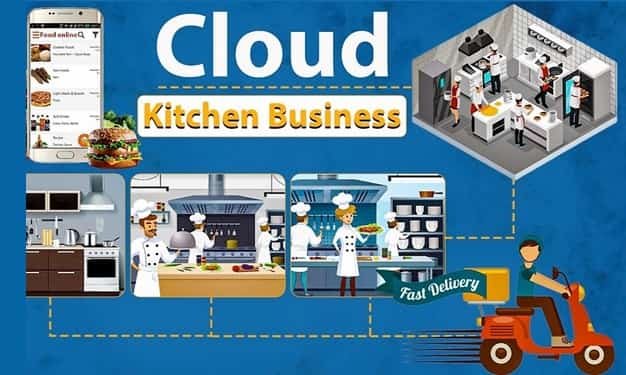
A cloud kitchen, sometimes called a virtual kitchen, delivery kitchen, or ghost kitchen, is a commercial food-preparation facility that primarily prepares food for delivery. It may operate under one or several food brands and receive orders through its own website, telephone, social media, or food-delivery platforms.
Unlike a conventional restaurant, a cloud kitchen normally does not need a customer dining area. However, the absence of dine-in facilities does not mean that food-safety regulations are avoided.
The Central Board of Indirect Taxes and Customs (CBIC) has specifically clarified that cooking and supplying food through cloud kitchens or central kitchens falls within the definition of restaurant service for GST purposes.
Is FSSAI Registration Mandatory?
Yes. A cloud kitchen is a food business and therefore generally needs the appropriate FSSAI registration or licence before commencing operations.
For smaller food businesses, FSSAI provides a registration category for petty food business operators. FSSAI currently states that petty food businesses with annual turnover up to ₹12 lakh can fall under the registration category, while businesses above the applicable threshold require a licence.
The appropriate category depends on factors such as the nature and scale of the operation, turnover and food-business activity.
Applications are made through FSSAI’s FoSCoS system. The FSSAI system also provides for food-business activities to be endorsed on the relevant licence or registration according to the applicable requirements.
Can a Cloud Kitchen Operate From Home?
A home-based cloud kitchen may be possible, but the legality depends on more than FSSAI registration.
The operator should check whether the residential premises can lawfully be used for the proposed commercial activity under applicable municipal, local-authority, housing-society, lease and zoning rules.
For example, a small home-based operation with limited production may raise different regulatory considerations from a large kitchen involving multiple employees, commercial equipment, significant storage, delivery traffic and waste generation.
Therefore, obtaining FSSAI registration should not be treated as automatic permission to commercially use every residential property as a cloud kitchen.
Hygiene and Food-Safety Requirements
Cloud kitchens must follow applicable food-safety and hygiene standards. FSSAI’s regulatory framework includes requirements concerning sanitary and hygienic practices for food businesses.
A cloud-kitchen operator should maintain appropriate standards for:
- Clean food-preparation areas
- Personal hygiene of food handlers
- Safe storage of ingredients
- Prevention of cross-contamination
- Proper cooking and handling of food
- Safe water and cleaning practices
- Pest control
- Waste disposal
- Appropriate food packaging
- Temperature-sensitive food storage where applicable
These requirements are important because delivery customers cannot inspect the kitchen themselves. The responsibility for ensuring that food is safe remains with the food business.
GST Rules for Cloud Kitchens
GST is another important consideration.
CBIC has specifically clarified that services involving cooking and supplying food by cloud kitchens and central kitchens are covered under “restaurant service.” This includes food supplied through takeaway and door-delivery models.
The GST treatment of restaurant services supplied through food-delivery platforms also has specific rules. CBIC has stated that restaurant services supplied through electronic commerce operators are covered by Section 9(5) of the CGST Act, meaning the e-commerce operator is responsible for paying GST on such notified restaurant services.
However, a cloud-kitchen owner should not assume that all GST obligations disappear simply because orders come through an app. The business should examine its turnover, supply model, registration position, invoicing and other applicable GST requirements.
Food Packaging and Labelling
Packaging is another area where cloud kitchens need to pay attention.
Food should be packed in suitable food-grade materials and handled in a manner that protects it from contamination during transportation. Where packaged food is sold, applicable FSSAI labelling and display requirements may also apply.
FSSAI’s Food Safety and Standards (Labelling and Display) Regulations, 2020 have been amended over time, including amendments notified in 2025 and 2026.
Businesses selling pre-packaged products should therefore verify the current labelling requirements rather than relying on old packaging templates.
Do Cloud Kitchens Need Other Licences?
FSSAI registration or licensing is essential, but it may not be the only compliance requirement.
Depending on the city, state, premises and business structure, the operator may need to examine requirements relating to:
- Municipal trade permissions
- Shops and Establishments laws
- GST registration, where applicable
- Fire-safety requirements
- Local health or sanitation permissions
- Waste-management requirements
- Commercial use of premises
- Labour and employment regulations
- Legal Metrology requirements for applicable packaged products
The exact requirements can vary significantly between locations.
Can a Cloud Kitchen Sell Through Swiggy or Zomato?
Yes. A cloud kitchen can generally use food-delivery platforms to receive orders, subject to the platform’s onboarding requirements and applicable laws.
However, listing a business on a delivery platform does not itself establish that the business is legally compliant. The kitchen remains responsible for meeting applicable food-safety and business requirements.
Operators should maintain valid documentation and ensure that the information provided to delivery platforms is accurate and consistent with their actual business operations.
What Happens If a Cloud Kitchen Operates Without Proper Compliance?
A cloud kitchen operating without the required registration, licence or other legally required permissions can face regulatory action.
FSSAI states that food businesses are required to be licensed or registered and that conducting food-business activities after suspension or cancellation of the relevant registration or licence is unlawful and may attract penalties.
Depending on the violation, enforcement measures can involve penalties, suspension or cancellation of licences and other action under applicable laws.
Final Takeaway
A cloud kitchen is legal in India, but it is not an unregulated business. The operator must comply with FSSAI requirements, maintain food-safety and hygiene standards, follow applicable packaging and labelling rules, and examine GST and local business requirements.
The first step for most operators is determining the appropriate FSSAI registration or licence based on the nature and scale of the food business. A cloud kitchen operating from a residential property should additionally verify whether the premises can legally be used for the proposed commercial activity.
In short, India’s legal framework does not prohibit the cloud-kitchen business model. Instead, it regulates the food business, premises, products, taxation and manner of operation. Entrepreneurs should therefore complete the necessary registrations and check city- and state-specific requirements before accepting commercial orders.