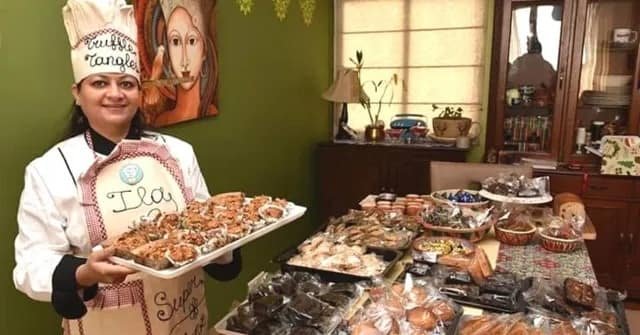
A catering business is not legally permitted to operate without the required FSSAI registration or licence in India. Catering is a food-business activity, and the Food Safety and Standards Authority of India (FSSAI) requires food businesses to obtain the appropriate registration or licence under Section 31 of the Food Safety and Standards Act, 2006. FSSAI specifically confirms that caterers serving weddings, parties and similar events must obtain FSSAI registration or a licence according to the applicable eligibility criteria.
This requirement applies whether the caterer operates from a permanent kitchen, home-based facility, temporary setup or another food-preparation premises. However, the type of FSSAI approval required can differ depending on the business’s turnover, activities and other eligibility conditions.
Is FSSAI Registration Mandatory for Caterers?
Yes. A catering business cannot simply begin commercial food operations without complying with the applicable FSSAI registration or licensing requirement.
Section 31 of the Food Safety and Standards Act, 2006 requires every Food Business Operator (FBO) to be licensed or registered. FSSAI describes licensing and registration as mandatory for food businesses and provides the FoSCoS system for applications and compliance.
FSSAI’s official FAQ specifically answers whether caterers providing food at marriages or parties need approval: yes, caterers must obtain FSSAI registration or a licence according to the applicable eligibility criteria.
Therefore, the fact that catering is performed only for occasional events does not, by itself, remove the FSSAI requirement.
Registration or Licence: Which One Does a Caterer Need?
An important distinction is that “FSSAI registration” and “FSSAI licence” are not necessarily the same thing.
FSSAI introduced revised turnover thresholds effective April 1, 2026 for new applications. Under the revised framework, food businesses with annual turnover up to ₹1.5 crore fall under Registration, those with turnover above ₹1.5 crore and up to ₹50 crore generally fall under a State Licence, and businesses exceeding ₹50 crore generally fall under a Central Licence.
This means a small catering business may require only FSSAI Registration, while a larger catering operation may require a State or Central Licence, depending on its circumstances.
Consequently, saying that a caterer needs an “FSSAI licence” in every case is not technically accurate. The correct requirement is the appropriate FSSAI registration or licence.
Does the Rule Apply to Wedding and Party Caterers?
Yes. Catering for weddings, birthdays, corporate events, religious functions and private parties is still a food-business activity.
FSSAI’s licensing FAQ specifically states that caterers catering to marriages or parties require FSSAI registration or a licence according to the applicable eligibility criteria.
A caterer therefore cannot rely on the temporary or event-based nature of the business as a reason for operating without FSSAI compliance.
The same principle can apply to businesses that prepare food at one location and transport it to an event venue for serving.
What If the Catering Business Is Small?
Being a small business does not mean that FSSAI requirements disappear.
A small caterer may qualify for FSSAI Registration rather than a higher-level licence if the business falls within the applicable turnover and activity criteria. Under the revised 2026 framework, the registration threshold is up to ₹1.5 crore in annual turnover for applicable food businesses.
This is important for home-based caterers and entrepreneurs who cater for small gatherings. They may have relatively simple compliance requirements compared with a large commercial catering company, but they still need the appropriate FSSAI approval.
What About Home-Based Catering?
A person operating a catering business from a home kitchen may also be subject to FSSAI requirements.
The location of the kitchen does not by itself eliminate the definition of a food business. The operator should obtain the appropriate FSSAI registration or licence and comply with applicable food-safety and hygiene standards.
However, FSSAI approval should not automatically be understood as permission to use any residential property for commercial purposes. Depending on the city and circumstances, municipal rules, local zoning requirements, housing-society rules, lease conditions, fire-safety requirements or other regulations may also apply.
Therefore, a home-based caterer should examine both food-safety compliance and premises-related requirements.
What Food-Safety Standards Must Caterers Follow?
FSSAI registration is only one part of compliance. Caterers are also expected to follow applicable hygiene and sanitary requirements.
A catering business should maintain appropriate standards relating to:
- Clean food-preparation areas
- Personal hygiene of food handlers
- Safe storage of ingredients
- Clean utensils and equipment
- Prevention of cross-contamination
- Safe cooking and food handling
- Appropriate temperature control
- Safe transportation of prepared food
- Pest control
- Waste disposal
- Suitable food packaging and serving equipment
These requirements become particularly important for large events where food is prepared in significant quantities and may remain available for several hours.
Can a Caterer Operate Without FSSAI Registration for Occasional Events?
Occasional work does not automatically create an exemption.
For example, if someone commercially accepts payment to prepare and supply food for a wedding or corporate event, that activity can fall within the food-business framework. FSSAI’s own FAQ confirms that marriage and party caterers require registration or a licence according to the eligibility criteria.
The key distinction is between a genuine commercial food business and a private individual preparing food informally for family or friends without operating a food business.
What Are the Risks of Operating Without FSSAI Approval?
Operating a food business without the required registration or licence can expose the operator to enforcement action under applicable food-safety legislation.
FSSAI states that registration or licensing is mandatory for food businesses under Section 31.
Apart from the regulatory consequences, operating without appropriate documentation can create practical problems when dealing with event organizers, corporate clients, online platforms, suppliers or commercial premises.
Maintaining valid FSSAI documentation can also help demonstrate that the business is operating within the applicable food-safety framework.
Does a Catering Business Need Other Registrations?
FSSAI compliance does not necessarily cover every legal obligation of a catering business.
Depending on its size, location and structure, a caterer may also need to consider:
- GST registration and applicable GST rules
- Shops and Establishments requirements
- Municipal trade permissions
- Fire-safety requirements
- Labour and employment laws
- Waste-management requirements
- Legal Metrology rules for applicable packaged products
- Local permissions for commercial use of premises
These requirements vary according to the business model and jurisdiction.
Final Takeaway
A catering business is not legally permitted to operate without the required FSSAI registration or licence in India. FSSAI specifically confirms that caterers serving weddings, parties and similar events must obtain the appropriate registration or licence.
The important point is that not every caterer needs the same type of FSSAI approval. Under the revised framework applicable from April 1, 2026, eligible food businesses with annual turnover up to ₹1.5 crore generally fall under Registration, while higher-turnover businesses move into State or Central licensing categories according to the applicable thresholds.
Therefore, before accepting commercial catering orders, an entrepreneur should determine the correct FSSAI category, complete the registration or licensing process, maintain food-safety standards and verify any additional state or local requirements applicable to the premises and business.