Choosing the right engine oil is essential for maintaining your vehicle’s performance, fuel efficiency, and engine life. Engine oil lubricates moving components, reduces friction, helps control heat, and carries contaminants away from critical engine parts. However, not all engine oils offer the same level of protection. Two common options are synthetic engine oil and mineral engine oil.
Synthetic oil is generally associated with better performance, temperature stability, and longer service intervals, while mineral oil is often more affordable and may suit certain older engines. The best option depends on your vehicle’s manufacturer recommendations, engine design, driving conditions, and maintenance budget.
Understanding the differences between synthetic and mineral engine oil can help you make an informed decision and avoid unnecessary maintenance expenses.
What Is Synthetic Engine Oil?
Synthetic engine oil is formulated using highly refined base oils and carefully selected additives. Depending on the product, it may use synthetic base stocks, advanced refining processes, or a blend of different base oils. These formulations are designed to provide consistent lubrication and protect engines under demanding conditions.
Synthetic oils generally flow more effectively during cold starts and maintain their protective properties across a broad temperature range. They may also resist oxidation and the formation of deposits better than conventional mineral oils, depending on the formulation.
Synthetic engine oil is commonly recommended for modern cars, turbocharged engines, high-performance vehicles, and vehicles that operate in demanding conditions. However, the oil must still meet the viscosity grade and performance specifications required by the manufacturer.
What Is Mineral Engine Oil?
Mineral engine oil is produced from crude petroleum through refining and is combined with additives to provide lubrication, cleaning, and protection against wear and corrosion.
It is often less expensive than synthetic oil, making it attractive to drivers who want to minimise routine maintenance costs. Mineral oil can work effectively in engines designed for it, provided the correct viscosity grade and performance classification are used.
However, conventional mineral oil may break down more quickly under high temperatures or severe operating conditions than a well-formulated synthetic alternative. It may also require more frequent changes in some applications.
Mineral oil is sometimes used in older vehicles, but age alone does not determine the right choice. The engine manufacturer’s recommendations and the vehicle’s condition should guide the decision.
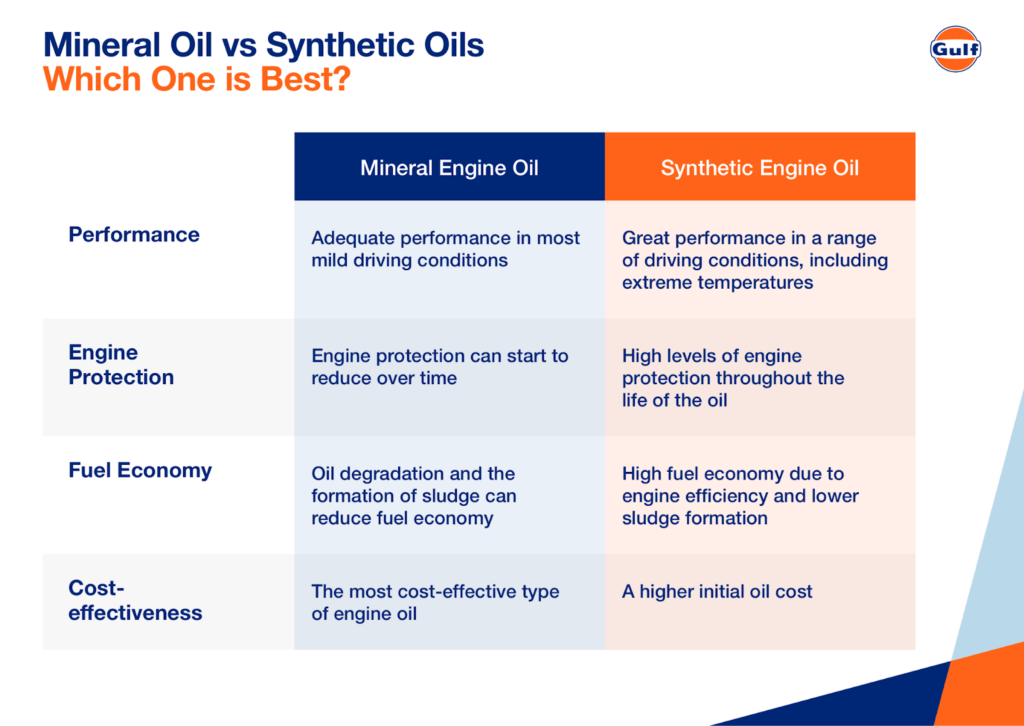
Synthetic Engine Oil vs Mineral Engine Oil: Key Differences
| Feature | Synthetic Engine Oil | Mineral Engine Oil |
| Base oil | Synthetic or advanced formulated base stocks | Refined petroleum base oil |
| Purchase price | Usually higher | Usually lower |
| Temperature performance | Generally more stable across temperature extremes | Depends on formulation; often less resistant to severe heat |
| Cold-start lubrication | Often flows more readily at low temperatures | Depends on viscosity grade and formulation |
| Oxidation resistance | Generally better in demanding conditions | Can degrade sooner under severe conditions |
| Oil-change interval | May support longer intervals when approved | May require shorter intervals in some applications |
| Engine protection | Strong protection when correctly specified | Effective protection when correctly specified |
| Common applications | Many modern, turbocharged, and high-performance engines | Engines approved for conventional oil, including some older designs |
These are general comparisons. The actual performance of an engine oil depends on its formulation, viscosity, quality standards, and suitability for the engine.
Performance in Different Driving Conditions
Driving conditions can influence how well an engine oil performs. In stop-and-go city traffic, an engine may experience frequent starts, idling, and repeated temperature changes. Synthetic oil’s resistance to oxidation and its ability to maintain viscosity can be beneficial in these conditions.
For highway driving, the engine often operates at sustained temperatures for extended periods. A suitable synthetic oil can provide consistent protection during demanding journeys, particularly in engines designed for it.
In hot climates, including many parts of India, engine oil must maintain an effective lubricating film at operating temperatures. Synthetic formulations often offer an advantage in thermal stability, but the correct viscosity grade and manufacturer approval remain essential. Mineral oil can still be suitable when the vehicle manufacturer permits it and the oil meets the required specifications.
Can You Use Synthetic Oil in an Older Car?
Synthetic oil can be suitable for many older vehicles, but switching should not be based on age alone. Check the owner’s manual for the recommended viscosity and performance standards, and consider the engine’s condition and service history.
A common misconception is that synthetic oil automatically causes leaks in older engines. In reality, existing worn seals or other mechanical problems may be responsible for leaks. If an older vehicle consumes oil or has visible leaks, have the cause assessed rather than assuming that mineral oil is always the safer option.
You should also avoid choosing a thicker oil simply because the engine is old. An unsuitable viscosity can affect lubrication and engine operation. Follow the manufacturer’s guidance or consult a qualified mechanic if the manual is unavailable.
How to Choose the Right Engine Oil
Before purchasing engine oil, check these essential points:
- Viscosity grade: Choose the specified grade, such as 5W-30 or 0W-20, as recommended by the manufacturer. The numbers describe oil viscosity under defined temperature conditions, not whether the oil is synthetic or mineral.
- Performance specification: Check the API, ACEA, or manufacturer-specific standard required for your vehicle. A higher-priced oil is not automatically suitable if it fails to meet the required specification.
- Engine type: Turbocharged engines and some modern engines have specific oil requirements that may favour particular synthetic formulations.
- Service interval: Follow the vehicle manufacturer’s oil-change schedule. Do not extend the interval simply because the bottle says synthetic.
- Authenticity: Buy sealed oil from a reputable seller and check the product label, batch details, and relevant approvals.
The American Petroleum Institute advises vehicle owners to consult their owner’s manuals when selecting engine oil. Its service categories help identify oils that meet specified performance requirements, but the correct category and viscosity must still match the engine.
Synthetic vs Mineral Engine Oil: Final Verdict
Synthetic engine oil is generally the better choice for modern vehicles because it offers strong temperature stability, good oxidation resistance, and reliable protection under demanding driving conditions. Although it usually costs more, its performance benefits may justify the additional expense.
Mineral engine oil remains a practical, economical option for engines designed to use it. Ultimately, the best engine oil is the one that meets your vehicle manufacturer’s specifications, whether synthetic or mineral. Choosing the correct oil and changing it at the recommended intervals matters more than selecting an oil based on price or marketing claims alone.
Frequently Asked Questions
Q. Is synthetic engine oil better than mineral engine oil?
Generally, synthetic oil offers better performance across temperature extremes and greater resistance to oxidation. However, mineral oil can provide effective protection when it meets the engine manufacturer’s requirements.
Q. Can I switch from mineral oil to synthetic oil?
Yes, many engines can safely use synthetic oil if it meets the specified viscosity and performance standards. Check your owner’s manual before switching.
Q. Does synthetic engine oil improve mileage?
It may help improve fuel efficiency by reducing friction, but the actual benefit depends on the engine, oil formulation, and driving conditions.
Q. Is mineral engine oil suitable for older cars?
It can be suitable for older cars that are designed for conventional oil. However, some older vehicles can also use synthetic oil. Always check the manufacturer’s recommendations.
Q. How often should engine oil be changed?
Follow the oil-change interval specified in your owner’s manual. The correct interval depends on the vehicle, oil specification, mileage, driving conditions, and service schedule.