Choosing the right braking system is an important part of buying a motorcycle or scooter. Brakes directly affect how quickly a vehicle can slow down, how well the rider maintains control, and how safely the vehicle responds to sudden hazards. Two common braking systems used in two-wheelers are disc brakes and drum brakes.
Disc brakes are widely used on modern motorcycles and scooters because they generally offer strong braking performance and better heat dissipation. Drum brakes, however, remain popular on affordable commuter bikes and scooters because they are relatively simple and can be economical to manufacture and maintain.
So, which is better: disc brakes or drum brakes? Disc brakes are generally preferable when braking performance and heat management are priorities, while drum brakes can be adequate for everyday commuting when properly designed and maintained. The right choice depends on the vehicle, riding conditions, budget, and braking configuration.
What Are Disc Brakes?
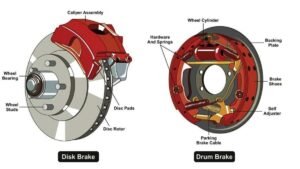
Disc brakes use a flat metal rotor, commonly called a brake disc, attached to the wheel. When the rider applies the brake, brake pads press against the rotating disc through a caliper, creating friction that slows the wheel.
This system is commonly found on the front wheels of motorcycles and scooters, and on both wheels of many higher-performance models.
One important advantage of disc brakes is their ability to dissipate heat efficiently because the rotor is exposed to airflow. This helps maintain more consistent braking performance during repeated braking, although performance still depends on the design, condition, and operating temperature of the system.
Disc brakes may be operated hydraulically or through other mechanisms, depending on the vehicle. Many modern two-wheelers use hydraulic disc brakes.
What Are Drum Brakes?
Drum brakes use a rotating drum attached to the wheel and brake shoes positioned inside it. When the rider applies the brake, the shoes press against the drum’s inner surface, generating friction that slows the wheel.
Drum brakes are commonly used on the rear wheels of budget-friendly motorcycles and scooters. Some smaller or older two-wheelers may use drum brakes at both ends.
Their enclosed construction protects many braking components from direct exposure to dirt and road debris. However, the design generally releases heat less effectively than a comparable disc brake, particularly during repeated hard braking.
Drum brakes can provide adequate stopping power for routine riding when properly maintained and used within their intended operating conditions.
Disc Brakes vs Drum Brakes: Key Differences
| Feature | Disc brakes | Drum brakes |
| Construction | Rotor, caliper, and brake pads | Drum and internal brake shoes |
| Heat dissipation | Generally better | Generally less effective |
| Repeated braking | Usually more consistent under demanding use | Can experience greater heat-related performance changes |
| Maintenance | Pads, rotor, caliper, and brake fluid where applicable | Shoes, drum, springs, and adjustment mechanisms |
| Initial cost | Often higher | Often lower |
| Wet conditions | Often effective, but performance depends on design and conditions | Can be affected by moisture inside the drum |
| Common application | Front brakes and performance-oriented models | Often rear brakes and budget commuter models |
These are general comparisons. Actual braking performance depends on the complete system, tyre grip, vehicle weight, suspension, and road surface.
Braking Performance and Stopping Distance
Braking performance is one of the biggest differences between these systems. Disc brakes generally provide strong, predictable braking and dissipate heat effectively, making them suitable for situations involving frequent or hard braking.
Drum brakes can also deliver effective stopping power, especially at lower speeds. However, repeated heavy braking can cause heat to build up inside the drum, potentially reducing braking effectiveness.
It is important to understand that stopping distance depends on more than the type of brake. Tyre grip, road conditions, vehicle speed, rider reaction time, and the condition of the braking system all play significant roles.
For example, a motorcycle with disc brakes cannot necessarily stop faster than every motorcycle with drum brakes. The overall design and condition of both vehicles matter.
Which is better? Disc brakes generally have the advantage in demanding braking situations, but properly maintained drum brakes can be suitable for routine commuting.
Maintenance and Repair Costs
Maintenance costs are another factor to consider when purchasing a two-wheeler.
Disc brakes require periodic inspection of brake pads, the disc rotor, caliper, and other components. Hydraulic systems also require appropriate brake-fluid maintenance. Replacement costs depend on the motorcycle, component quality, and labour charges.
Drum brakes generally have a simpler construction and can be less expensive to maintain. Their brake shoes eventually wear out, and the drum may require inspection or servicing. Adjustment may also be necessary, depending on the design.
Neither system is maintenance-free. Regular inspections and timely replacement of worn components are essential for safe braking.
If affordability is your main concern, drum brakes may offer an advantage. However, the additional expense of disc brakes may be worthwhile if you frequently ride in demanding traffic conditions.
Which Brakes Are Better for Indian Roads?
Indian roads often involve crowded traffic, sudden stops, uneven surfaces, and unpredictable obstacles. These conditions make reliable braking particularly important.
For riders who regularly commute through busy cities, a disc brake at the front can provide useful braking performance and heat management. A combined braking system (CBS) or anti-lock braking system (ABS), where available and appropriate, can also influence overall braking safety.
Drum brakes can still be adequate for smaller commuter motorcycles and scooters when used correctly and maintained properly. Riders should choose a braking configuration appropriate for the vehicle and their typical journeys.
Avoid selecting a two-wheeler solely because it has disc brakes. Consider the tyre quality, braking technology, vehicle weight, and availability of safety features as well.
Which Should You Choose?
Choose a two-wheeler with disc brakes if you:
- Prioritise strong braking performance and heat dissipation.
- Frequently ride in demanding traffic conditions.
- Want a braking system suited to repeated braking.
- Are willing to pay for potentially higher maintenance or replacement costs.
A drum-brake-equipped two-wheeler may suit you if you:
- Mainly travel short distances at moderate speeds.
- Want an affordable commuter vehicle.
- Prefer a simpler braking system.
- Ride a model whose manufacturer-designed braking system meets your needs.
For many buyers, a front disc brake with a suitable rear braking system offers a practical balance of performance and everyday usability.
Final Verdict
When comparing disc brakes vs drum brakes for two-wheelers, disc brakes generally have the advantage in heat management and demanding braking conditions, while drum brakes offer a practical and often more affordable solution for everyday commuting.
If safety and braking performance are your priorities, consider a model with a well-designed disc-brake system and appropriate safety features. If you need an economical commuter, drum brakes may be suitable when they meet the manufacturer’s specifications for your vehicle.
Ultimately, the best choice is not determined by brake type alone. Compare the complete braking system, maintain it regularly, and ride at a speed appropriate for road and traffic conditions.
Frequently Asked Questions
Q. Which is better, disc brakes or drum brakes?
Disc brakes generally offer better heat dissipation and more consistent performance during demanding braking. Drum brakes can be adequate and economical for everyday commuting.
Q. Are disc brakes safer than drum brakes?
Disc brakes can offer advantages in demanding situations, but overall safety depends on the complete braking system, tyres, road conditions, and rider behaviour.
Q. Which brakes require less maintenance?
Drum brakes may have lower routine maintenance costs, while disc brakes require inspection of pads, rotors, and, where applicable, hydraulic components. Actual costs vary by model.
Q. Are rear drum brakes sufficient for a scooter?
A properly designed and maintained rear drum brake can be sufficient for its intended use. The complete braking configuration and vehicle specifications should guide your decision.
Q. Do disc brakes work better in rain?
Disc brakes can perform effectively in wet conditions, but water, contamination, tyre grip, and brake design affect performance. Always brake smoothly and allow additional stopping distance in wet weather.