India is famous for its vibrant street food culture. From pani puri and chaat to samosas, pakoras, momos, and pav bhaji, street food is an essential part of daily life for millions of people. During the monsoon season, however, enjoying these tasty treats can come with increased health risks. Heavy rainfall, high humidity, poor sanitation, and water contamination create favorable conditions for bacteria, viruses, and other harmful microorganisms to grow. As a result, foodborne illnesses become more common during this time of year.
This does not mean all street food is unsafe during the monsoon, but it is important to understand the potential risks and make informed choices.
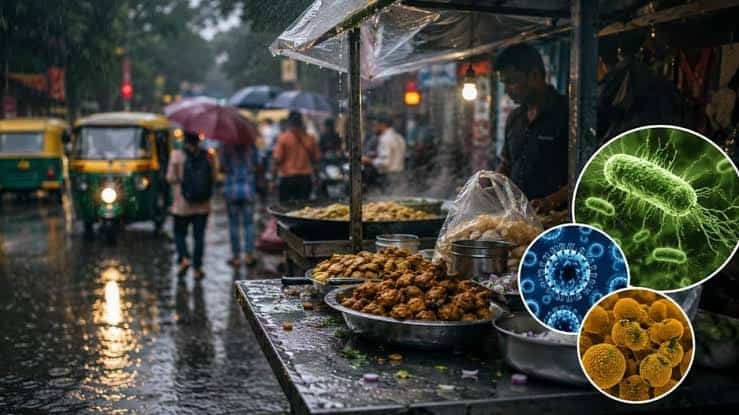
Why Does Monsoon Increase Food Safety Risks?
The rainy season creates ideal conditions for microorganisms to multiply. Warm temperatures combined with moisture allow bacteria and fungi to grow rapidly on food, utensils, and cooking surfaces.
Rainwater may also carry dirt, sewage, and other contaminants into streets and open food stalls, increasing the risk of contamination.
1. Contaminated Water
One of the biggest concerns during the monsoon is the use of unsafe water.
Street vendors may use water for:
- Preparing chutneys
- Washing vegetables
- Making flavored drinks
- Cleaning utensils
- Preparing ice
If the water is contaminated, harmful microorganisms can spread to food and beverages, increasing the risk of stomach infections.
2. Faster Growth of Bacteria
High humidity and warm weather allow bacteria to multiply quickly.
Foods that are left uncovered or kept at room temperature for long periods become more vulnerable to contamination.
Common examples include:
- Chaat
- Cut fruits
- Sandwich fillings
- Chutneys
- Dairy-based desserts
These foods may spoil faster during the rainy season than in cooler weather.
3. Increased Risk of Food Contamination
Many street food stalls operate in open environments where food is exposed to:
- Dust
- Rainwater
- Vehicle pollution
- Flies
- Insects
Without proper covering, these contaminants can settle on food and increase the chance of foodborne illness.
4. Poor Hand Hygiene
Street food vendors often handle money, raw ingredients, cooking utensils, and ready-to-eat food throughout the day.
If proper handwashing facilities are unavailable, germs can easily spread from hands to food.
Good personal hygiene plays a major role in reducing food contamination.
5. Cross-Contamination
Cross-contamination occurs when harmful microorganisms spread from one surface or food item to another.
Examples include:
- Using the same knife for raw and cooked foods
- Reusing unwashed cutting boards
- Mixing fresh ingredients with contaminated utensils
Proper food handling practices are essential to minimize this risk.
6. Improper Food Storage
Many street food items are prepared in advance and stored for several hours before being served.
During the monsoon, improper storage at unsafe temperatures allows bacteria to multiply rapidly.
Foods that contain dairy, cooked vegetables, meat, or seafood are especially sensitive to temperature changes.
7. Risk from Raw Ingredients
Several popular street foods contain raw vegetables, herbs, or garnishes.
Examples include:
- Onion
- Coriander
- Cucumber
- Tomato
- Mint
If these ingredients are washed with contaminated water or stored improperly, they may carry harmful microorganisms.
Fried Foods Are Not Always Risk-Free
Many people believe that fried foods are completely safe because they are cooked at high temperatures.
While freshly fried food is generally safer than food left standing for long periods, problems can still occur if:
- Old cooking oil is repeatedly reused.
- Cooked food is left uncovered.
- Food is handled with unclean utensils after frying.
Freshly prepared hot food is usually a better choice than items that have been sitting for hours.
Common Foodborne Illnesses During Monsoon
Consuming contaminated food or water during the rainy season may increase the risk of illnesses such as:
- Food poisoning
- Gastroenteritis
- Diarrhea
- Typhoid fever
- Cholera
- Hepatitis A
Symptoms may include nausea, vomiting, stomach cramps, diarrhea, fever, and dehydration. People experiencing severe or persistent symptoms should seek medical care promptly.
Tips for Eating Street Food Safely During Monsoon
If you enjoy street food, these precautions can help reduce your risk:
- Choose vendors who maintain clean cooking areas.
- Prefer freshly cooked food served hot.
- Avoid raw salads or cut fruits from roadside stalls.
- Avoid beverages containing ice unless you are confident it is made from safe drinking water.
- Check that utensils and serving plates appear clean.
- Observe whether the vendor handles food hygienically.
- Drink only clean, sealed bottled water or safe filtered water.
- Wash your hands or use hand sanitizer before eating.
Foods to Be Extra Careful With
Some foods require extra caution during the rainy season because they spoil quickly or are often served without further cooking.
These include:
- Cut fruits
- Fruit juices
- Chaat with raw toppings
- Dairy-based sweets
- Seafood kept at room temperature
- Foods containing mayonnaise or cream
Choosing freshly cooked meals instead of ready-to-eat items can help lower the risk.
Is All Street Food Unsafe During Monsoon?
No. Many street food vendors follow good hygiene practices and prepare food safely. Freshly cooked dishes served piping hot from clean stalls are generally a safer option than foods that have been stored for long periods.
The key is to select vendors who maintain cleanliness, use safe water, and prepare food in front of customers.
Conclusion
Street food is an important part of India’s rich culinary culture, but the monsoon season brings additional food safety challenges. Increased humidity, contaminated water, poor sanitation, and rapid bacterial growth can make improperly handled food unsafe to eat. By choosing clean food stalls, eating freshly cooked hot meals, avoiding raw or uncovered foods, and practicing good personal hygiene, you can significantly reduce your risk of foodborne illnesses. Enjoying street food responsibly during the rainy season allows you to experience its delicious flavors while protecting your health.